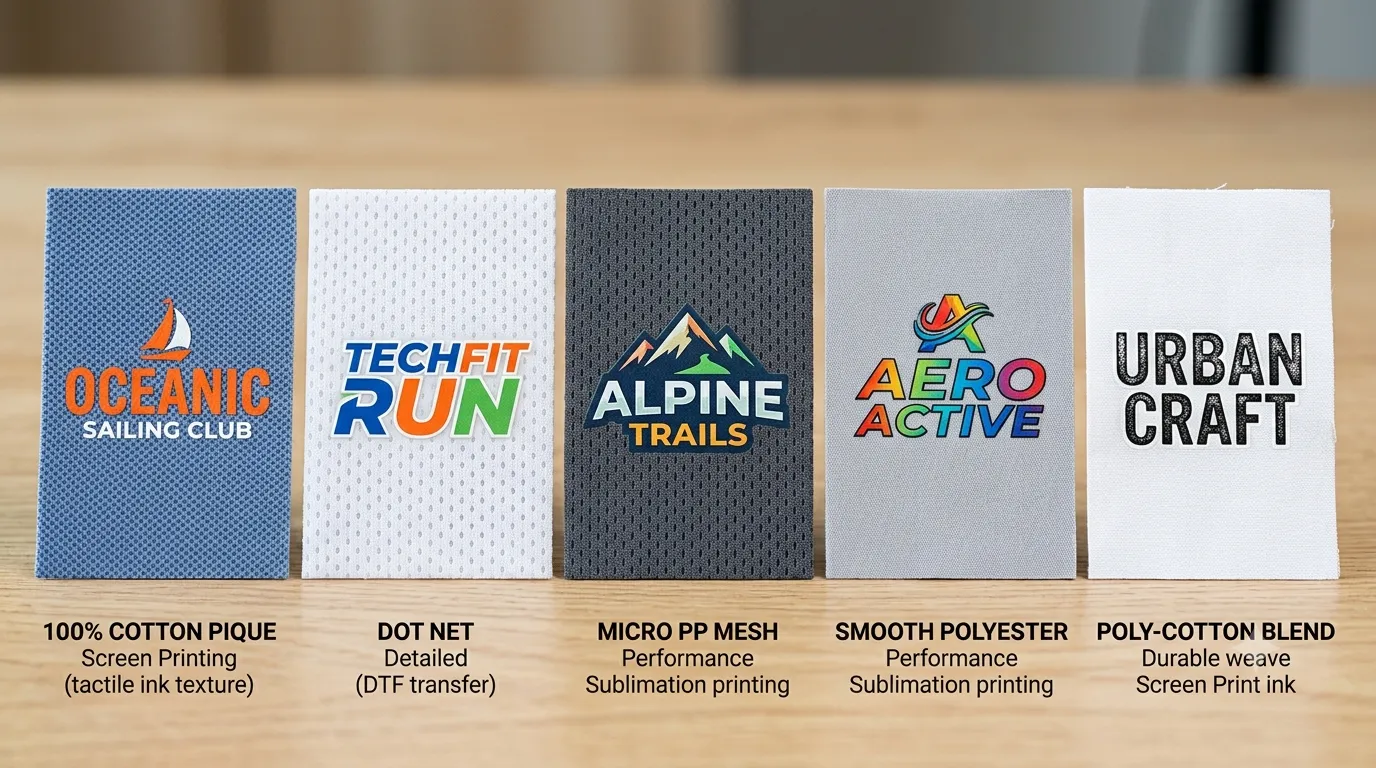
When launching a custom apparel campaign, designing a merchandise line, or sourcing uniforms for an event, choosing the right printing technology is only half the battle. The true secret to a flawless finished product lies in fabric compatibility.
Not all fabrics accept every printing method. A print technique that produces retail-grade vibrant results on one material might peel, fade, or completely burn on another.
In this comprehensive guide, we break down the most popular T-shirt fabrics in the market—from budget-friendly polyesters to high-end combed cottons—and reveal which printing technologies work best for both low-volume custom orders and high-volume mass production.
Understanding GSM: The Fabric Density Metric
Before diving into specific fabrics, every buyer must understand GSM (Grams per Square Meter). GSM measures the weight and density of the fabric.
Low GSM (120 – 140 GSM): Lightweight, highly breathable, ideal for sports or high-heat environments, but can feel thin if not chosen correctly.
Medium GSM (160 – 180 GSM): The standard retail weight for everyday T-shirts. Strikes a balance between durability and comfort.
Heavyweight GSM (200 – 240+ GSM): Premium, thick, structure-retaining fabric popular in oversized streetwear and luxury apparel.
Industry Note: In low-cost polyester markets, suppliers rarely disclose exact GSM because fabrics are heavily mass-produced. However, knowing the approximate GSM helps you select the correct print method—especially for heat-heavy processes like DTF.
1. Pure Polyester Fabrics (140 GSM)
The Budget King of Customization
Pure polyester is one of the most competitively priced fabrics on the market. Its synthetic polymer structure makes it uniquely receptive to high-heat ink transfer.
Primary GSM: Typically around 140 GSM.
Best Printing Compatibility: Sublimation Printing, Direct UV, Screen Printing, DTF.
Customization Dominance: Sublimation + 140 GSM Polyester. Because sublimation inks gasify and fuse directly into polyester fibers at 200°C, the result is a zero-feel, unpeelable, permanent print at a rock-bottom production cost.
DTF Consideration: While DTF works on polyester, lightweight 140 GSM fabric can sometimes feel weighed down by heavy TPU powder layers.
🔗 Explore Product: View Budget Polyester Round Neck T-Shirts
2. Micro PP (Poly-Polypropylene Blends)
The Athletic & Activewear Workhorse
Micro PP is a specialized, highly breathable polyester variant (often engineered with micro-mesh pores) favored by sports teams, fitness brands, and marathons.
- Market Position: Priced slightly higher than basic 140 GSM polyester, but significantly more affordable than 100% pure cotton.
Color Handling:
Light Colors (White/Pastels): Heavily paired with Sublimation for affordable, sweat-resistant custom sportswear.
Dark Colors (Black/Navy): Paired with DTF, Direct UV, or Screen Printing to achieve crisp, opaque graphics that pop against dark backgrounds.
Why It Dominates: It offers a soft, premium hand-feel while keeping manufacturing costs comfortably in the mid-range.
🔗 Explore Product: View Performance Micro PP Sportswear T-Shirts
3. Dot Net Fabrics
Premium Textured Look at an Affordable Price
Dot Net is a distinctive micro-patterned polyester fabric that features subtle geometric pinholes. Available in both Round Neck and Polo T-shirts, it provides a structured, high-end look without the premium cotton price tag.
Best Printing Compatibility: Sublimation Printing.
Market Advantage: Sublimation on Dot Net is considered the gold standard for promotional corporate events and budget-friendly team gear. You get the breathing capability of structured knit wear combined with full-color, dye-locked artwork.
Winning Combination: Dot Net Round Neck + Sublimation is the single most dominant product combination for large-scale promotional custom orders.
🔗 Explore Product: View Corporate Dot Net Polo & Round Neck T-Shirts
4. Pure 100% Cotton (Matte Cotton)
The Gold Standard for Premium Apparel
Pure cotton is categorized primarily by its weight (GSM) and weave (e.g., Single Jersey for Round Necks, Pique/Matte for Polos). Unlike synthetic polyesters, 100% pure cotton cannot accept dye-sublimation printing because natural cotton fibers do not melt or bind with sublimation gases.
Printing Realities for Pure Cotton
DTF (Direct-to-Film): The ultimate choice for low-to-medium volume custom cotton orders. DTF applies a flexible, vibrant TPU polymer print that sits crisply on top of cotton fibers regardless of fabric color.
Screen Printing: Highly cost-effective for mass production (100+ identical units), but setup costs (screens, color separations) make it impractical for unique, low-quantity custom prints.
Direct UV & Industrial Printing: Used heavily by commercial retail manufacturers for pre-printed graphics on mass-market retail clothing.
Customization vs. Retail Cost Breakdown
Customization Market: Cotton custom apparel naturally costs 1.3x to 1.5x more than polyester custom apparel. This is because the fabric itself costs more, and DTF printing costs 2x to 4x more per square inch than sublimation ink.
Mass Retail Market: Retail brands lower costs by mass-producing 10,000+ units at a time using automated screen printing or industrial UV systems, cutting print setup costs to near zero.
The Ultimate Premium Combination
For Polo T-Shirts, nothing beats 100% Matte Pique Cotton + High-Definition DTF Print. When buyers opt for the structural weight of a collar, they almost universally pair it with premium DTF branding for an unmatchable corporate or streetwear aesthetic.
🔗 Explore Product: View Premium 100% Matte Cotton Polo T-Shirts
5. Poly-Cotton Blends (PC Fabrics)
The Perfect Middle Ground
Poly-Cotton (PC Knit) combines the breathability and softness of cotton with the tear resistance and shrink control of polyester. Common blend ratios include 70/30 (Poly/Cotton) and 50/50.
Why It Works: It bridges the gap between budget synthetics and expensive natural fibers.
Sublimation Compatibility: If the polyester content is high enough (typically 65%+), PC fabrics can accept sublimation printing, producing a soft, vintage, slightly heathered print finish.
Market Dominance in Mass Retail: Many off-the-rack retail T-shirts labeled or perceived as “cotton blends” are actually high-grade PC fabrics. They offer a luxurious cotton feel while keeping production costs low.
Best Use Cases: Cultural fests, college merchandise, corporate off-sites, and mid-budget streetwear lines.
🔗 Explore Product: View Versatile Poly-Cotton (PC) Blend T-Shirts
Summary Matrix: Fabric vs. Printing Tech Compatibility
| Fabric Type | Sublimation | DTF Printing | Screen Printing | Direct UV | Top Ideal Use-Case |
|---|---|---|---|---|---|
| 140 GSM Polyester | ⭐⭐⭐⭐⭐ | ⭐⭐ | ⭐⭐⭐⭐ | ⭐⭐⭐⭐ | High-Volume Budget Customization |
| Micro PP | ⭐⭐⭐⭐⭐ | ⭐⭐⭐⭐⭐ | ⭐⭐⭐⭐ | ⭐⭐⭐⭐ | Activewear, Marathons, Sports Teams |
| Dot Net | ⭐⭐⭐⭐⭐ | ⭐⭐⭐⭐⭐ | ⭐⭐⭐⭐ | ⭐⭐⭐⭐ | Corporate Promo Gear & Events |
| Poly-Cotton (PC) | ⭐⭐⭐ (Vintage) | ⭐⭐⭐⭐⭐ | ⭐⭐⭐⭐⭐ | ⭐⭐⭐⭐⭐ | College Merch & Everyday Retail |
| 100% Pure Cotton | ❌ (Not Compatible) | ⭐⭐⭐⭐⭐ | ⭐⭐⭐⭐⭐ | ⭐⭐⭐⭐⭐ | Premium Corporate Polos & Streetwear |
Need Custom T-Shirts Tailored to Your Specific Budget & Quality Needs?
Choosing the right combination of fabric GSM and printing technology ensures your T-shirts look amazing, feel comfortable, and stay within budget. Whether you need 500 sublimation-printed event tees or 50 high-end DTF-printed corporate pique polos, we’ve got you covered.
👉 Check out our full commercial capabilities on our dedicated Designing Galaxy T-Shirt Printing Service Page.